Natural Park of the Montgó Massif
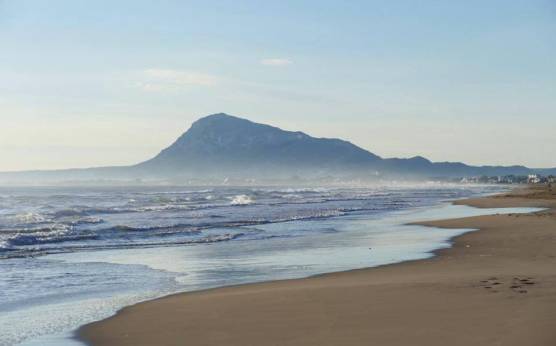
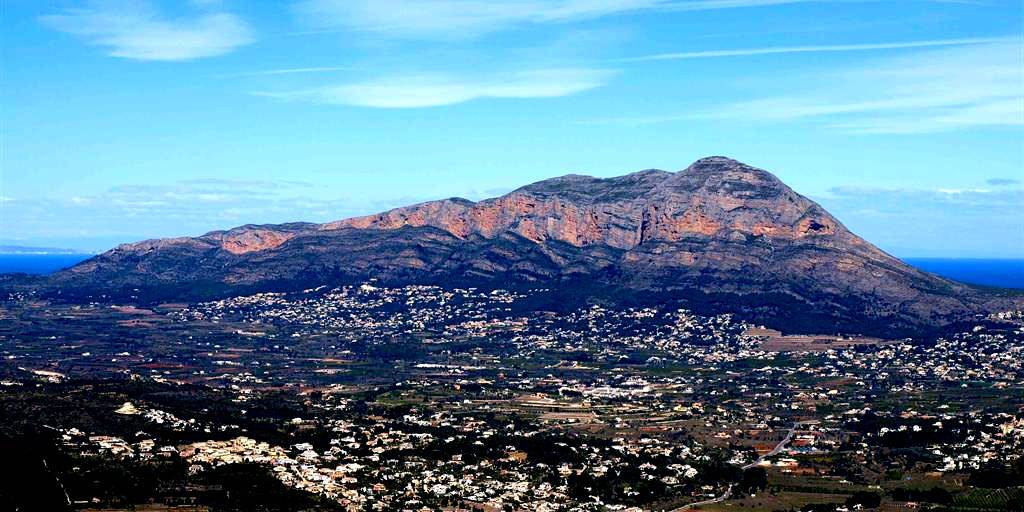
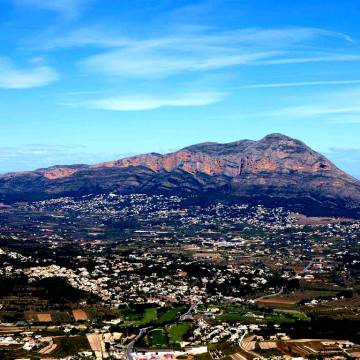
The Montgó Natural Park rises majestically over the plains of Jávea and Dénia. Its solitary figure makes it an iconic landmark in the region, visible from several kilometers around, greatly contributing to the beauty of the Marina Alta landscape. This massif is the last mountain in the eastern part of the Pre-Betic mountain range before it abruptly plunges into the waters of the Mediterranean, thus creating the impressive cliffs of Cape San Antonio.
With a maximum height of 753 meters and covering an area of 2,118 hectares in the Marina Alta region, Montgó has been recognized as a Site of Geological Interest due to its stratigraphy and synclinal structure resulting from the collision of the European and African continental plates.
In 1987, the Valencian Generalitat granted it the status of Natural Park. In 2002, its protection was expanded with two significant projects: the approval of the Natural Resources Management Plan (PORN), which created a buffer zone of 7,500 hectares spread across the municipalities of Dénia, Jávea, Gata de Gorgos, Pedreguer, and Ondara, aimed at preventing the biological isolation of the massif; and the declaration of Cape San Antonio as a Marine Reserve, where the rocky seabeds along its coast and the seagrass meadows of Posidonia are protected, creating a special protection zone for marine fauna.
The park stands out for its scenic beauty, rich flora, and cultural value. Its ecosystems, with over 650 plant species, of which 52 are endemic, include pine forests, scrublands, sea cliffs, and traditional agricultural fields. The fauna comprises 150 vertebrate species, with a significant presence of birds of prey such as the Bonelli's eagle, as well as mammals like the fox and reptiles like the ocellated lizard, not to mention a wide range of invertebrates.
The climate is typically Mediterranean, with mild winters and dry summers. Rainfall is scarce and concentrated in spring and autumn. The effect of cryptoprecipitation (precipitation from dew) is common on its summit due to water condensation in clouds. It also has a very pronounced southern face, receiving a lot of sunlight throughout the year, while its northern face exhibits characteristic greenery because, during winter, the sun does not reach certain areas, clearly differentiating the vegetation on either side of the massif.
The Montgó Natural Park is a protected area that preserves a spectacular landscape, rich biodiversity, and interesting geology in a region where the mountain meets the sea, creating a unique environment.
Sections
Sections